Umina Coastal Sandplain Woodland
A low woodland of rough-barked apple and bangalay over banksias, burrawangs and wattles, growing on the old sand dunes of the Woy Woy Peninsula. It grows nowhere else in the world.
It was listed as an endangered ecological community in New South Wales in 2002. The NSW Scientific Committee found it was likely to become extinct in nature unless the threats to it stop. The largest patch left is around Umina Oval, and part of it is the patch we look after at Ettymalong Billabong.
Why it only grows here
The Umina–Woy Woy sandplain is a series of old beach ridges: low dunes and swales with swamps and creeks between them. The sand has weathered into a particular soil, an iron podzol, and this woodland grew up on it.
Botanists first described it in 1952. Bangalay grows best just behind the beach, and rough-barked apple takes over for up to two kilometres inland. Further from the coast, on different soils, smooth-barked apple woodland takes its place.
A 2004 study found that all the dry woodland on the Umina sandplain is the same community, and that it is distinctly different from every other kind of coastal sand vegetation in the region.
How much is left
The NSW Government estimates the woodland once covered about 80 hectares. Less than a tenth of that remains.
Mapping in 2006 found just 13.36 hectares in 12 separate patches. They range from 0.03 to 4.07 hectares, and many are thin strips around ovals and along drains. Thin patches have a lot of edge, which lets weeds, mowers and rubbish in.
None of it is in a national park or nature reserve.
Where the remaining patches are
The larger remnants mapped in 2006, in hectares. The highlighted one includes our patch at Ettymalong Billabong.
- Umina Oval, southern and western edges (includes our patch at the billabong)
- McEvoy Oval, Umina
- Burrawang Reserve, Woy Woy
- Hillview Street, Umina (private land)
- Brisbane Water Secondary College, Umina campus (two patches)
- Drainage reserve beside Umina Oval, Etta Road
- Greenhaven Drive playground, Umina
Plus four tiny patches, each a third of a hectare or less: Britannia Street (Umina), the Brisbane Water foreshore, Pearl Beach and Patonga. Sizes are from the 2007 NSW Government restoration plan.
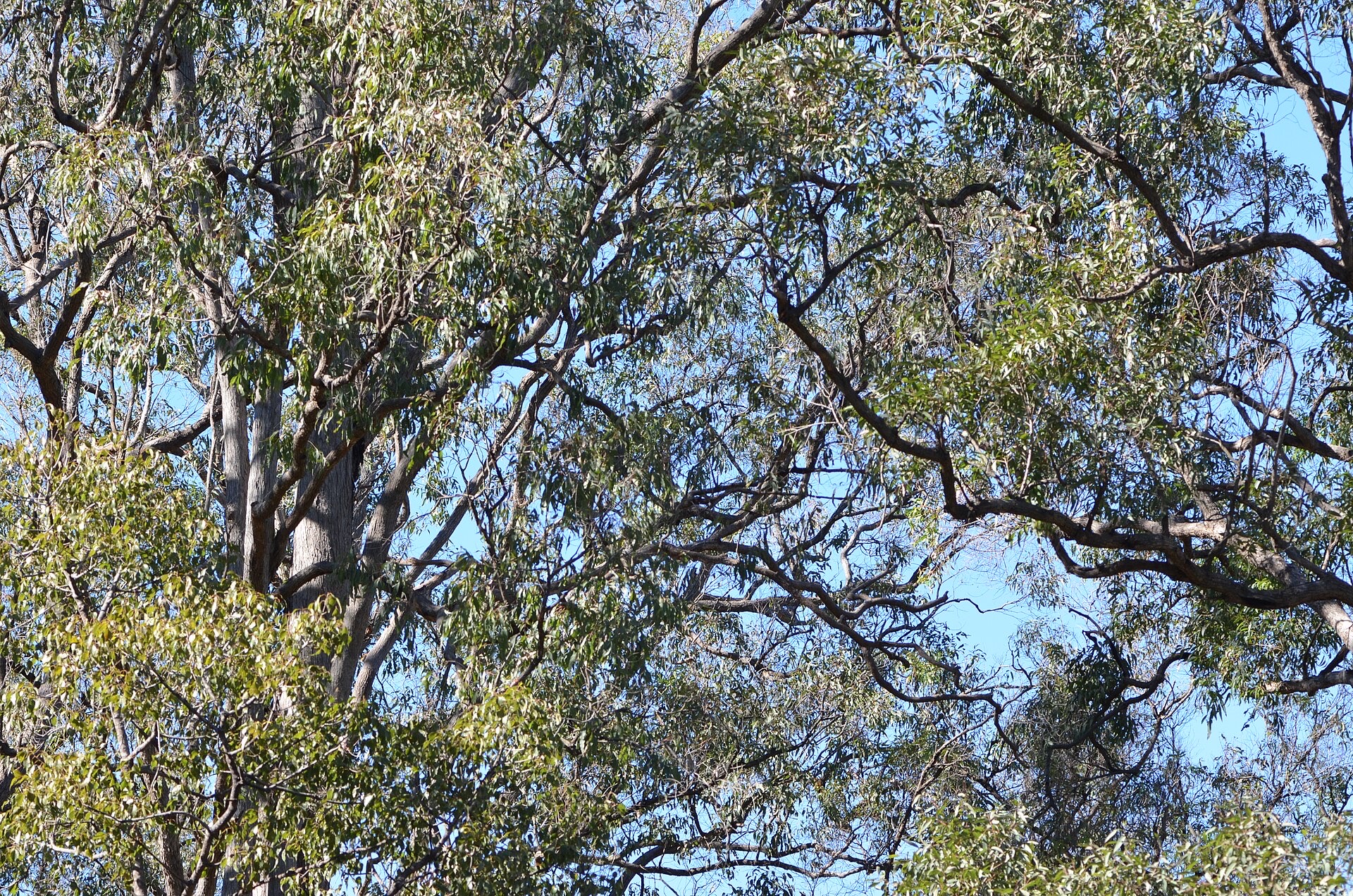
Rough-barked apple is the tree that defines the woodland.Angophora floribunda. Photo: Margaret Donald, CC BY 2.0
What threatens it
- Clearing for houses, which took most of it in the first place
- Mowing and slashing, which stops banksias and wattles regenerating
- Weeds such as lantana, bitou bush, ground asparagus and coral trees
- Garden waste and rubbish dumped over back fences
- Bike tracks and short cuts that trample the understorey
- Fires that come too often for the plants to recover
What we do about it
Today we're a small group looking after one patch, at Ettymalong Billabong beside Umina Oval. Most of the work is patient weeding so the native plants can come back by themselves from the seed in the soil, plus planting local species where they can't.
In earlier years the group worked right along the creek system, cleaning it up and removing big coral trees, some of them on private land. Our history has the full story.
We also keep asking Council to stop mowing remnant bush and to treat the creeks and the woodland as the rare places they are.
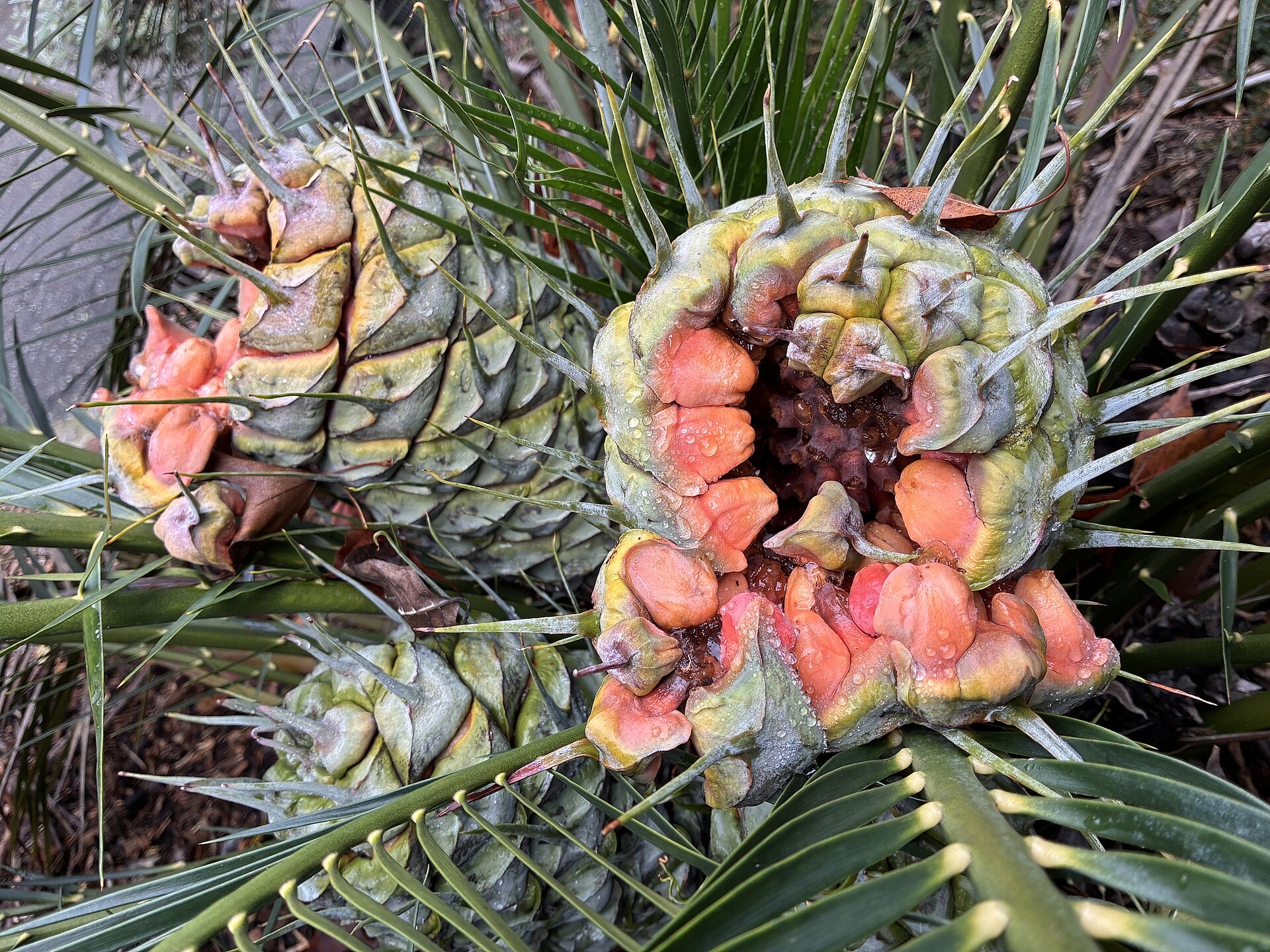
Burrawang is a cycad, from a group of plants that was here before the dinosaurs.Burrawang cone and seeds. Photo: Awinch1001, CC BY 4.0
Plants to look for
The official listing names 75 native plants, and notes the full list is much longer. These are the ones that give the woodland its character.
-
 Rough-barked apple Angophora floribunda Main canopy tree Krzysztof Golik, CC BY-SA 4.0
-
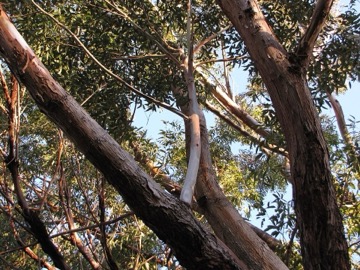 Bangalay Eucalyptus botryoides Canopy tree, mostly nearer the beach Forest and Kim Starr, CC BY 3.0 us
-
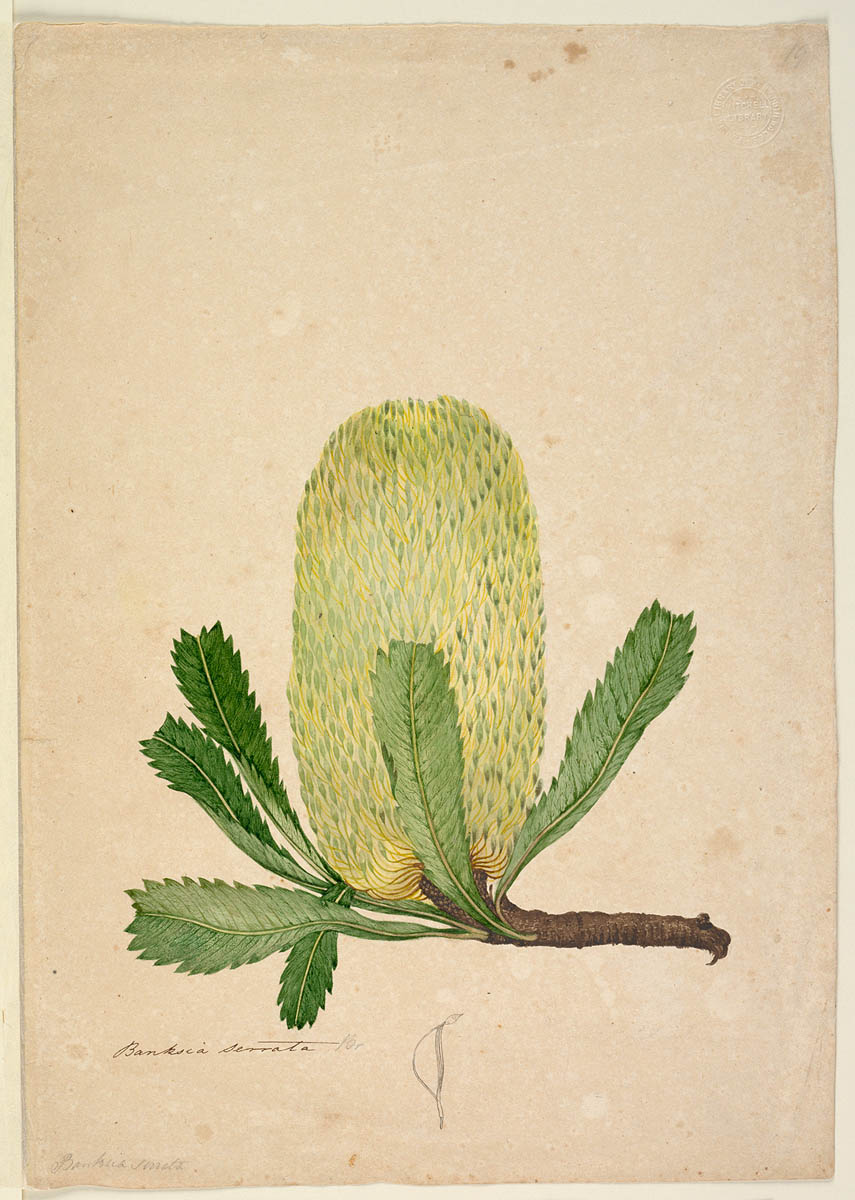
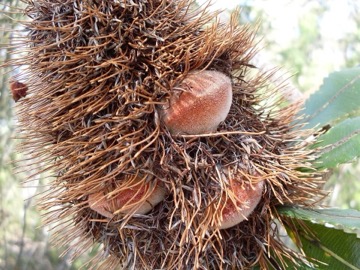 Old man banksia Banksia serrata Small tree, with knobbly old cones John Tann, CC BY 2.0
-
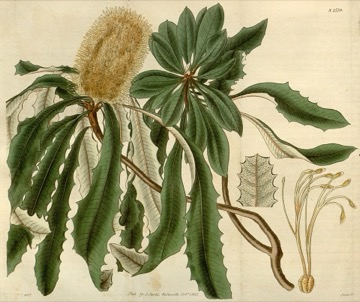 Coast banksia Banksia integrifolia Small tree Curtis's Botanical Magazine, Public domain
-
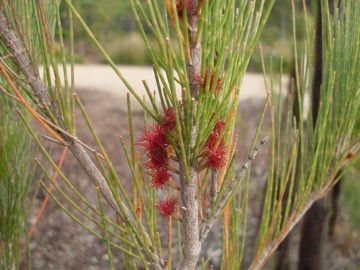 Forest oak Allocasuarina littoralis Small tree John Tann, CC BY 2.0
-
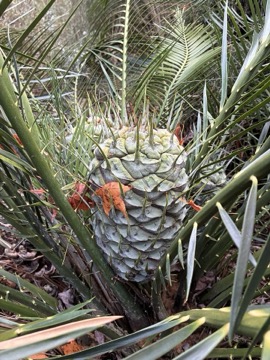 Burrawang Macrozamia communis Cycad in the shrub layer Awinch1001, CC BY 4.0
-
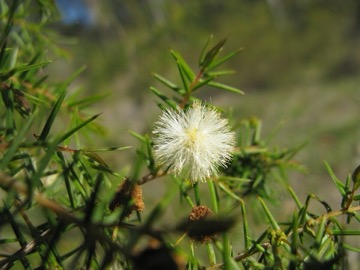 Prickly Moses Acacia ulicifolia Shrub Macleay Grass Man, CC BY 2.0
-
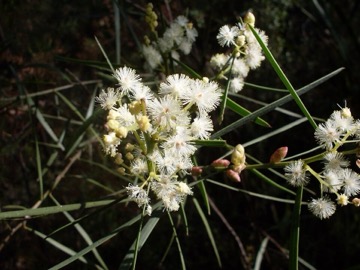 Sweet wattle Acacia suaveolens Shrub John Tann, CC BY 2.0
-
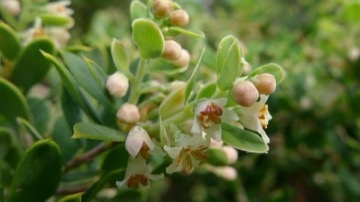 Tree broom-heath Monotoca elliptica Shrub John Tann, CC BY 2.0
-
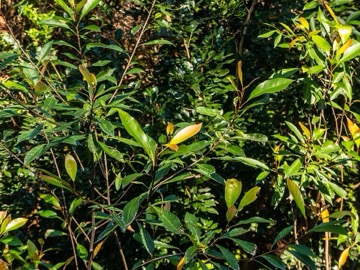 Blueberry ash Elaeocarpus reticulatus Small tree John Robert McPherson, CC0
-
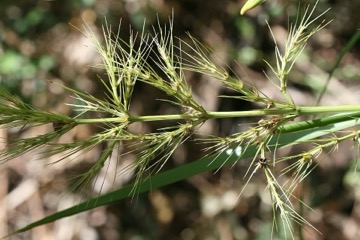 Spiny-headed mat-rush Lomandra longifolia Groundcover Arthur Chapman, CC BY 2.0
-
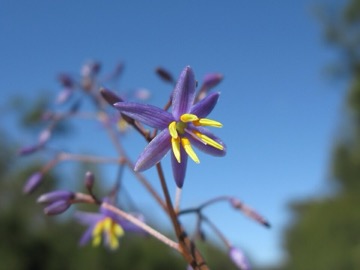 Blue flax lily Dianella caerulea Groundcover Harry Rose, CC BY 2.0


Look out for wildlife too. The 2007 plan records glossy black cockatoos feeding on forest oak seeds at Burrawang Reserve, and the endangered bush stone-curlew visiting the Umina college campus.
Where this comes from
- Final determination: Umina Coastal Sandplain Woodland NSW Threatened Species Scientific Committee, 2002 (amended 2011)
- Threatened ecological community profile NSW BioNet
- Umina Coastal Sandplain Woodland Restoration and Rehabilitation Management Plan NSW Department of Environment and Climate Change, June 2007